


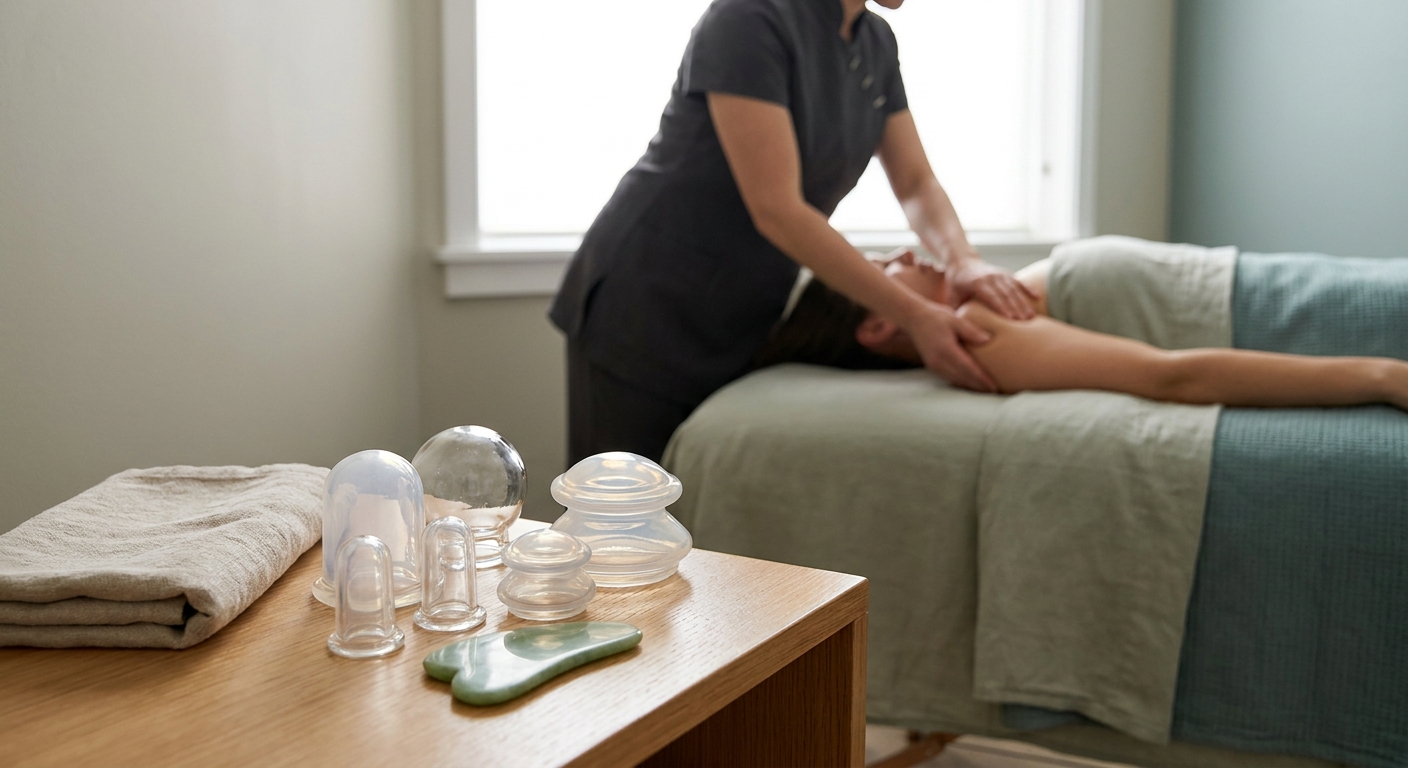
When you deal with persistent muscle tension or restricted movement, finding the right therapeutic modality can make all the difference in your recovery. Hands on massage, cupping, and gua sha each offer distinct physiological mechanisms to relieve pain, restore mobility, and improve tissue function. Understanding how these therapies differ helps you make informed choices for your body maintenance.
How Hands On Massage Works
Traditional therapeutic massage relies on compressive force. A skilled therapist uses their hands, forearms, and elbows to apply downward pressure into tight muscle groups and connective tissue. This mechanical pressure softens dense muscle knots, lengthens shortened fibers, and stimulates blood circulation throughout the body. At Massage Strong, our focus centers on deep tissue techniques that target underlying postural strain and chronic tension patterns.
Decompression Through Cupping Therapy
While massage compresses tissue downward, cupping therapy achieves the exact opposite through negative pressure. Silicone or glass cups create a vacuum seal that lifts the skin and superficial fascia away from the underlying muscle. This upward suction decompresses tight layers of connective tissue, encourages fresh lymphatic fluid into stagnant areas, and increases local blood flow. Cupping is especially effective for stubborn stiffness across the upper back, shoulders, and hips where dense fascia restricts normal movement.
Targeted Fascial Release With Gua Sha
Gua sha utilizes a smooth tool to apply repetitive, unidirectional strokes along the surface of lubricated skin. Rather than compressing deep muscle bellies or pulling tissue upward, gua sha creates gentle friction across the superficial layers of fascia. This scraping motion stimulates microcirculation, releases microscopic adhesions, and triggers the body to initiate a natural healing response. It is frequently applied along the neck, shoulders, and calves to ease acute tightness and restore smooth sliding between tissue planes.
Choosing the Right Approach for Your Body
None of these therapies exist in isolation. Many clients achieve the greatest relief by integrating multiple techniques into a single session. For example, pairing deep tissue work with targeted cupping allows therapists to address both deep structural tension and surface fascial restrictions.
Whether you are recovering from demanding athletic training or managing daily physical strain, personalized care ensures your treatment matches your goals. Contact Massage Strong in Lexington or Nicholasville today to schedule your therapeutic session.